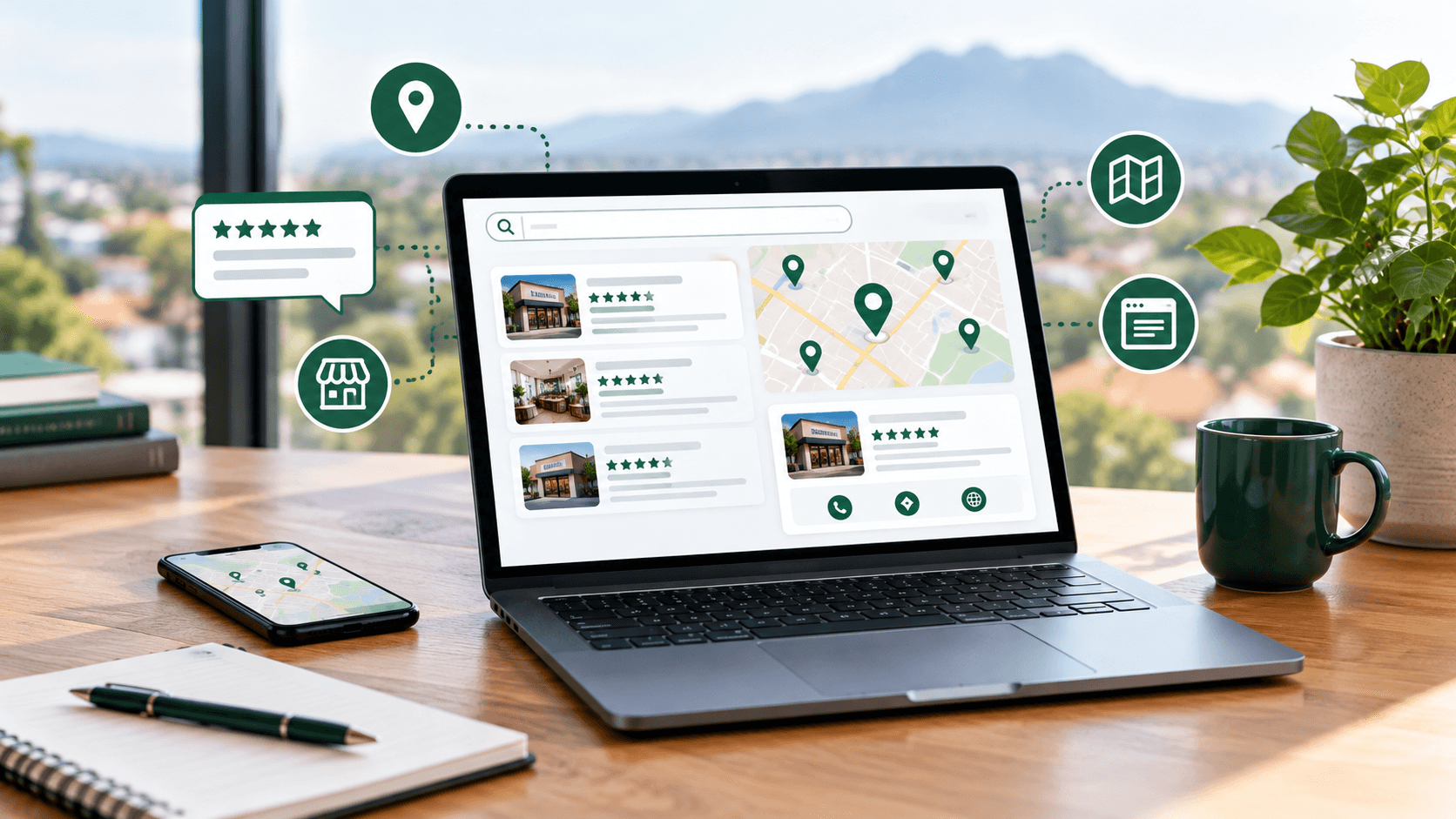
A business that serves several towns may want to appear when potential customers search for its services in each area. Creating useful local website content can help people understand where the business operates, what it offers and how to enquire.
The difficulty is that local SEO can easily become a page-production exercise. A business creates dozens of pages, changes only the town name and hopes that each variation will rank independently.
That approach can produce thin, repetitive content that offers little value to visitors. Google's spam policies describe doorway abuse as creating pages for similar searches that funnel visitors towards a more useful destination, including substantially similar pages targeting different cities or regions.
The better approach is to create pages for real customer needs, supported by accurate information about the services and areas a business genuinely serves.
For South African small businesses, this means thinking carefully about the difference between a service area, a physical business location and a location that appears only in keyword research.
What is a local SEO landing page?
A local landing page is a website page that helps people understand a business's services in a particular geographic context.
Depending on the business, it might describe:
- A service offered to customers in a particular town.
- A genuine office or shop that customers can visit.
- A service area covered by a mobile or travelling business.
- A local project or case study.
- Practical details that help customers decide whether to enquire.
A useful page answers questions that matter to someone considering the business. It should not exist solely to repeat a search phrase.
For example, a business serving customers in Soshanguve may have useful information about its appointment process, the services it provides in that area and the next steps for customers. A generic page with "Soshanguve" inserted into the heading and otherwise identical text may offer very little additional value.
The right structure depends on the business model, the number of genuine locations and the differences between the services offered in each area.
1. Start with your real operating model
Before creating local pages, establish how the business actually serves customers.
There are several common situations.
A physical location: Customers can visit a genuine shop, office or other eligible business premises.
A service-area business: The business travels to customers or delivers to them rather than receiving customers at its business address.
A hybrid business: Customers can visit the business at its location, and the business also serves customers elsewhere.
These distinctions affect how a business should represent itself online, particularly through Google Business Profile.
Google's guidelines for representing your business explain the requirements for business locations, service-area businesses and hybrid businesses. A virtual office that is not genuinely staffed and operated as required does not become an eligible location simply because a business rents an address.
Do not create a location page that suggests customers can visit an office when no such customer-facing location exists. Likewise, do not imply that a business has staff or premises in every town mentioned on its website.
2. Decide whether a separate page is justified
Not every town requires its own landing page.
Start by asking whether a dedicated page would provide information that is meaningfully different from the content already available.
A separate page may be justified when:
- The business genuinely offers the relevant service in that area.
- Customers in that area have distinct practical requirements.
- The business has relevant local projects, experience or examples.
- Availability, delivery, appointments or service arrangements differ.
- The page can answer specific questions that the general service page does not address.
A separate page is less useful when the only difference is the town name.
Consider a business that serves Maboloka, Soshanguve and Centurion. It should first establish whether these areas genuinely fall within its operating arrangements. If they do, it can then decide whether the differences between those customer journeys justify separate pages.
If the service and customer experience are essentially the same everywhere, a well-written service-area page may be more useful than several nearly identical town pages.
The goal is not to maximise the number of URLs. It is to make the most relevant information easy to find.
3. Avoid doorway pages
Doorway abuse is a documented Google Search spam policy.
Google's examples include multiple pages or websites targeted at specific regions or cities that ultimately funnel users towards the same destination, and substantially similar pages that sit close to search results without providing a useful browsing structure.
This does not mean every location page is prohibited. A legitimate business can provide useful information about different offices, service areas or local customer needs.
The distinction is whether the pages serve users or primarily attempt to manipulate search visibility.
Warning signs of weak local pages
Review your site for patterns such as:
- Dozens of pages with the same paragraphs and different town names.
- Pages that claim local expertise without supporting evidence.
- Repeated claims about offices or teams that do not exist.
- Location pages that offer no useful information beyond a contact button.
- Several domains created to target variations of the same search.
- Pages that all lead to one general service page without meaningful local value.
If these patterns describe your website, do not simply rewrite the headings. Reconsider whether the pages are needed and whether their content serves a genuine purpose.
Google's people-first content guidance encourages content that provides original, useful information rather than pages produced mainly to attract search traffic.
4. Give each page a clear purpose
A local page should answer the questions a potential customer is likely to have.
Depending on the service, useful information may include:
- What the business does.
- Which services are actually available.
- How the service is delivered.
- Whether appointments are required.
- How customers can request a quotation.
- What information the business needs before it can respond.
- Genuine examples of work relevant to the service.
- Any real limitations on availability or delivery.
Do not invent local details just to make a page appear unique. If the business has no project photographs or customer case studies from a particular area, it should not imply that it does.
A page can still be useful without claiming a long history in the area. Clear service information and an honest explanation of the enquiry process are better than fabricated local credibility.
5. Use local keywords naturally
Keyword research can help identify how potential customers describe their needs.
A person might search for a service together with a town name, suburb or broader geographic area. Others may use a service phrase without mentioning a location because their search engine already has geographic context.
Use these phrases to understand intent, not as a checklist requiring every keyword to appear in every paragraph.
A practical page structure could include:
- A clear title that describes the service and relevant area.
- A main heading that matches the page's actual purpose.
- An introduction explaining what is offered.
- Details about the service and how it works.
- Useful local information where it is genuinely relevant.
- A clear next step for people who want to enquire.
Avoid repeating a phrase such as "service in town" in every heading, image description and paragraph.
Google's guidance recommends using words people would use to search for the content in prominent, descriptive locations. It does not require unnatural repetition.
6. Make your Google Business Profile accurate
Website landing pages and Google Business Profile serve related but different purposes.
A website page can explain services in detail. A Business Profile helps eligible businesses represent their real-world presence and provides information that may appear across Google Search and Maps.
The profile must reflect the actual business.
For a service-area business, Google says the business should generally use one profile for its central location and designate the service area. If the business does not serve customers at its business address, it should remove that address from the profile.
Google's service-area management guidance explains that service areas should be specified accurately using supported geographic areas. A service area is not simply a radius selected to capture more searches.
Do not create separate Business Profiles for towns merely because they are attractive keywords. Google allows profiles for separate locations when the business meets its applicable requirements, including the relevant real-world operating arrangements.
Keep business details consistent
Review the information customers see across your website and business profiles:
- Business name.
- Actual business address, where applicable.
- Telephone number.
- Website.
- Opening hours or availability.
- Services offered.
- Service areas.
Correct inconsistencies when details change. Do not add town names or service keywords to the business name unless they are genuinely part of the real-world business name and comply with Google's guidelines.
7. Show genuine evidence instead of making broad claims
Local content becomes more useful when it includes specific information that the business can substantiate.
Depending on the business, this may include:
- Photographs of real completed projects.
- Case studies describing the work performed.
- Customer feedback published with appropriate permission.
- Clear explanations of how the service is delivered.
- Practical information about appointments or delivery.
- Answers to questions commonly raised by customers.
Keep evidence accurate and current. Do not label a stock photograph as a completed project or imply that a customer testimonial relates to a town when it does not.
If you use case studies, explain the problem, the work performed and the result without inventing performance figures or confidential customer details.
These elements can help a visitor make an informed decision even when they do not directly change a search ranking.
8. Structure the website so location pages make sense
Local pages should belong to a clear website structure.
A simple structure might contain:
- A main service page explaining the offering.
- A service-area page describing where the business operates.
- Dedicated location pages only where they provide additional value.
- Relevant case studies or examples.
- Clear links to related services and contact information.
Avoid creating a disconnected collection of pages that visitors cannot navigate naturally.
Use descriptive internal links so people understand where each link leads. A page about a particular service should link to relevant supporting information rather than repeatedly linking to unrelated pages using keyword-heavy anchor text.
Also review whether every location page is genuinely necessary. If several pages repeat the same information, consolidating them may improve clarity for users and reduce maintenance work.
9. Measure local performance realistically
Local SEO is not measured by rankings alone.
Depending on the tools available, useful indicators may include:
- Search impressions and clicks for relevant queries.
- Visits to important local landing pages.
- Enquiries that mention a particular service area.
- Calls or other interactions recorded by eligible business tools.
- The proportion of enquiries that match the services offered.
- Changes in customer questions after page improvements.
Rankings can vary by search location, device, query and other circumstances. A single manual search is not a reliable measurement of how every potential customer sees the results.
Where possible, compare results over a suitable period and consider changes in demand, competition, seasonality and marketing activity.
Do not assume that a new location page caused an improvement simply because enquiries increased after it was published. Review the evidence before deciding which changes to repeat.
SEO assessment: If you want to review your website's local search approach, visit Mogen's SEO audit section to discuss possible improvements.
10. Build a manageable local content plan
Small businesses can avoid unnecessary page production by planning their content around actual services and customer needs.
Start with the main services. For each one, document the audience, the problems it solves, the areas genuinely served and the questions customers commonly ask.
Then decide which information belongs on the main service page and whether any location-specific content is justified.
Review the result before publishing.
Ask:
- Would this page help a visitor who arrived directly from a search?
- Does it contain useful information beyond a town name?
- Are all local claims accurate?
- Is the page distinct enough to justify its own URL?
- Can visitors find it through the website's navigation?
- Does it provide a clear and honest next step?
Publish fewer, more useful pages when that is the better answer. A smaller website with a coherent structure can be more helpful than a large collection of repetitive location pages.
Published promotions: Review Mogen's promotions page for currently published offers that may be relevant to your website or digital marketing requirements.
Frequently asked questions
Should I create a page for every town I want to rank in?
Not automatically. Create separate pages when they provide meaningful, accurate information for different customer needs. Do not generate substantially similar pages solely to target town-name variations.
Can a business have a Google Business Profile without a shop?
Eligible service-area businesses can have a profile even when customers do not visit their business address. They must follow Google's rules for representing the business and its service area.
Should I mention Maboloka, Soshanguve and Centurion on one page?
Mention locations where they genuinely relate to the service and customer journey. Whether they belong on one page or several depends on the business's real operating model and the information customers need.
Do local landing pages guarantee better rankings?
No. A useful, accurate page can support discovery and help customers understand the business, but search engines decide which pages to show and where they appear.
Conclusion
Effective local SEO begins with an accurate understanding of the business, its customers and the areas it genuinely serves.
Build location pages only when they add value, keep Google Business Profile information accurate and use local keywords naturally. Avoid fake locations, repetitive content and pages that exist only to funnel visitors towards the same destination.
The best local landing page is one that helps a potential customer understand the service and decide what to do next, whether or not the customer arrived through a local search.